It’s safe to say that we do a lot of cooking in our house. Over the years, we have tried hundreds of recipes, experimented with different cuisines, and filled the kitchen with ingredients I never knew I needed.
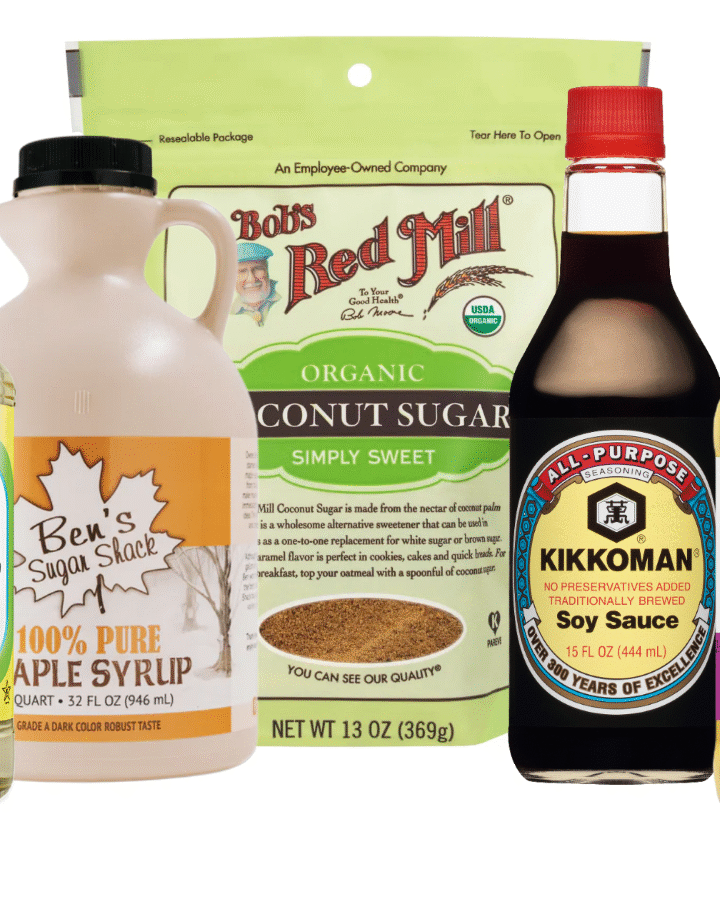
Some ingredients only come out for one specific recipe. These five are different. I use them in marinades, sauces, glazes, dressings, stir-fries, and all kinds of everyday meals.
Here are five uncommon pantry ingredients that have earned a permanent place in my kitchen.
A Quick Guide to These Pantry Ingredients
- Soy sauce adds saltiness, umami, color, and depth.
- Real maple syrup adds sweetness with a deeper flavor than plain sugar.
- Coconut palm sugar adds a mild caramel flavor to sauces and marinades.
- Rice vinegar adds acidity without the harsh bite of distilled white vinegar.
- Mirin adds gentle sweetness, umami, and a glossy finish.
1. Soy Sauce
Soy sauce is number one on my list. It is the bottle I reach for whenever a dish tastes like it is missing something.
It adds saltiness, but that is only part of what it does. Soy sauce also brings umami, color, and a deeper savory flavor. It works in Chinese, Japanese, and Thai-inspired cooking, but I also use it in chicken wings, pulled pork, burgers, marinades, pan sauces, and glazes.
When you are experimenting, start with a small amount. Add a teaspoon at a time to sauces, soups, or cooked dishes, then taste before adding more. For marinades, one or two tablespoons per pound of meat is usually a good starting point.
You can see soy sauce put to work in my Chicken Lo Mein.
2. Real Maple Syrup
Coming in at number two, real maple syrup is right behind soy sauce at the top of the list. Michelle thinks I have a problem because I keep bringing home maple syrup every time I go shopping. My feeling is that you can never have enough maple syrup. It’s literally liquid gold. Here’s a picture from one of my recent grocery runs to emphasize my point:
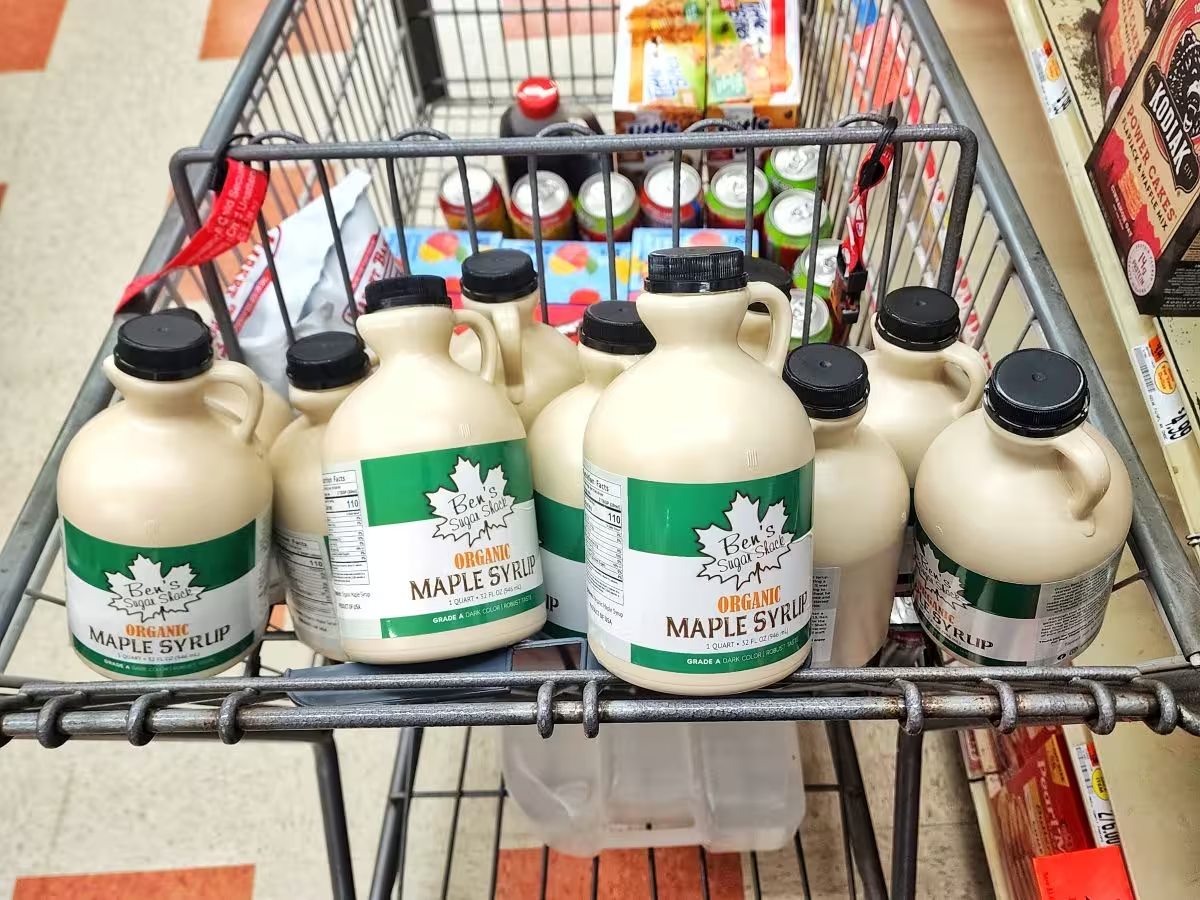
Ok, maybe that’s a bit too much maple syrup! I didn’t actually buy all that. I just love to give Michelle a hard time, so I texted her this during my shopping trip and got this GIF back in return:

So why use the real stuff? Real maple syrup brings more than sweetness. It has a deeper flavor that works especially well in marinades, barbecue sauces, glazes, and salad dressings.
It is still sugar, so I use it for the flavor it brings rather than treating it as a free pass. Start with a teaspoon or two when balancing a sauce. You can always add more if the dish needs it.
Of course, it is also great on pancakes, French toast, and waffles. Sunday morning pancakes are a big deal in our house, and the kids love the real stuff. You can try it on Dad’s Best Pancakes Ever.
3. Coconut Palm Sugar
I was introduced to coconut palm sugar while searching for the perfect pad Thai recipe. It has a mild caramel flavor that I enjoy, and its sweetness does not hit quite the same way as plain white sugar.
Coconut palm sugar works well in marinades, sauces, glazes, and Southeast Asian-inspired dishes. It is also a practical option when a recipe calls for palm sugar and you cannot find the traditional ingredient locally.
It is important to remember that coconut palm sugar is still added sugar. I keep it in the pantry because of its flavor, not because I consider it a health food.
It dissolves best in warm liquids. If you are adding it to a cold marinade or dressing, mix it with a small amount of warm water or another warm liquid first.
4. Rice Vinegar
Rice vinegar has not completely replaced distilled white vinegar in my kitchen, but it has come pretty close.
It has a gentler bite that works especially well in marinades, sauces, salad dressings, slaws, stir-fries, and sushi rice. I even use it in my homemade tomato soup to add a little brightness at the end.
When buying rice vinegar, check the label to see whether it is seasoned or unseasoned. Seasoned rice vinegar usually contains added sugar and salt. I prefer unseasoned rice vinegar for most cooking because it gives me better control over the final flavor.
Start with a teaspoon when finishing a sauce or soup. Taste the food, then add more if it needs additional brightness.
5. Mirin
I like to think of mirin as the Marsala of Japanese cooking. That is not a technical definition, but it is an easy way to understand how I use it.
Mirin is a Japanese cooking seasoning that adds gentle sweetness, umami, and a glossy finish. I use it in marinades, sauces, glazes, stir-fries, sushi rice, and pan sauces. I have even used it in place of Marsala when I was in a pinch.
Hon mirin, sweet cooking rice seasoning, and mirin-style seasoning are not exactly the same. Depending on the product, the amount of alcohol, sugar, and salt can vary. Check the label and taste your sauce before adding extra salt or sugar.
Mirin works especially well with soy sauce. Together, they create a strong base for teriyaki-style sauces, marinades, and glazes.
Coconut palm sugar, rice vinegar, and mirin all work together in The Mega Murphwich.
Which Ingredient Should You Try First?
Start with the ingredient that best fits the way you already cook.
If you make stir-fries, marinades, or savory sauces, start with soy sauce, rice vinegar, or mirin. If you make barbecue sauces, glazes, or dressings, try real maple syrup or coconut palm sugar.
Once you get comfortable with these ingredients, you will start finding uses for them everywhere. That is how each one earned a permanent spot in my kitchen.
Want another simple ingredient trick that can improve your cooking? Read Should You Use Baking Soda in Ground Beef?